Fine or thin hair? Niche Salon Bangkok explains the difference
“My hair is so thin.” We hear it almost every week, and more often than not, it’s not quite the right word for what’s actually happening. People use fine hair and thin hair interchangeably, but two completely different things cause them. Mixing them up is probably the single biggest reason clients end up with a bathroom shelf full of products that never quite worked.
It’s an easy mix-up to make. Both words describe hair that feels like it’s lacking something: body, volume, presence. But “fine” and “thin” describe two separate physical properties. A routine built around the wrong one usually backfires. Someone with fine hair who keeps buying “thickening” products aimed at low density might end up more weighed down than when they started. Someone with genuinely low density who keeps buying lightweight formulas made for fine strands might not get the styling support they actually need.
So before we get into products or treatments, let’s separate the two.
The difference, properly explained
Fine describes the width, or diameter, of an individual strand. Hair typologists usually break texture into fine, medium, and coarse. The difference is entirely about the strand itself, not how many of them you have. Roll a single hair between your fingers and fine hair is nearly impossible to feel. Coarse hair has real body to it, almost like a thin wire. Medium sits in between. This is a genetic trait you largely inherit, and it doesn’t change over your life the way density can.
Thin, more accurately called low density, describes how many individual strands you have per square inch of scalp. We usually group density into low, medium, and high. Genetics plays a role here too, but unlike texture, density can shift over time due to age, hormonal changes, certain medications, stress, or underlying health conditions. That’s part of why people treat “thin hair” as a problem to solve, while they treat “fine hair” as a texture to manage. They’re really asking different questions: how much hair do I have, versus how substantial is each strand.
The four combinations
Here’s where it gets interesting. These two traits are independent of each other, so every combination is possible:
- Fine and high density. Lots of thin strands packed closely together. This can look and feel surprisingly full, even though each individual hair is delicate.
- Fine and low density. The trickiest combination. Delicate strands and not many of them, which leaves very little margin for heavy products or over-processing.
- Coarse and high density. Thick, plentiful hair, often hard to manage in terms of sheer volume and frizz control.
- Coarse and low density. Fewer strands, but each one is sturdy enough to handle richer treatment without going limp.
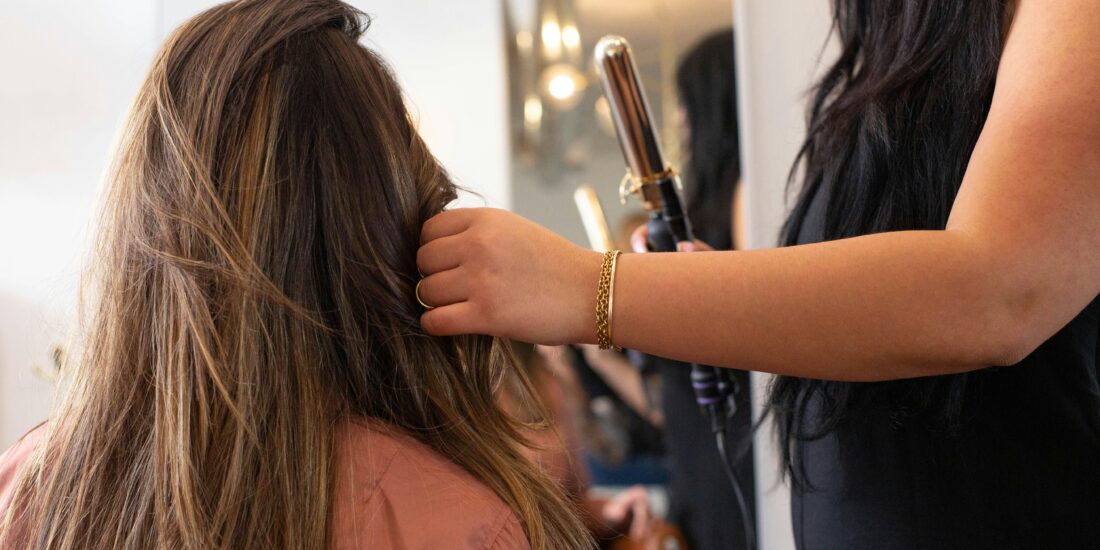
A stylist assessing your hair almost always evaluates both of these independently, along with a few other factors like porosity and scalp condition, before making a product or service recommendation. Skipping that step, and going straight for whatever’s marketed as “volumizing,” is where a lot of routines go wrong.
Why the distinction changes what you should do
Fine and low-density hair fail in different ways, so the fix has to target the actual issue.
If your hair is fine
Fine hair’s main problem is that it gets weighed down easily. The individual strands are too delicate to hold up heavy formulas, so oils, butters, and rich creams that sound luxurious on the label often just make fine hair look flatter and greasier faster. The goal is almost always to add the appearance of body and texture without adding physical weight.
If your hair is low density
Low-density hair’s main problem is coverage. There simply isn’t enough hair to create the visual fullness most people want. This has much less to do with product weight and much more to do with cut, styling technique, and sometimes strategic use of root-lifting products. Layering, strategic thinning (or the opposite, avoiding over-thinning), and parting technique can do more for low density than any product swap.
If it’s both
When both traits show up together, your margin for error shrinks significantly. You have little room for heavy product and limited natural coverage to work with, so both product choice and cutting technique matter more than usual. Coarse hair with low density, on the other hand, is often the most forgiving combination: the strand itself can handle richer products, and enough natural texture keeps a lower strand count from reading as sparse.
What actually helps: building the right routine
Fine hair: go lightweight. Skip oils and butters, apply conditioner mid-shaft to ends only, and use leave-ins sparingly. Fine hair gets weighed down fast.
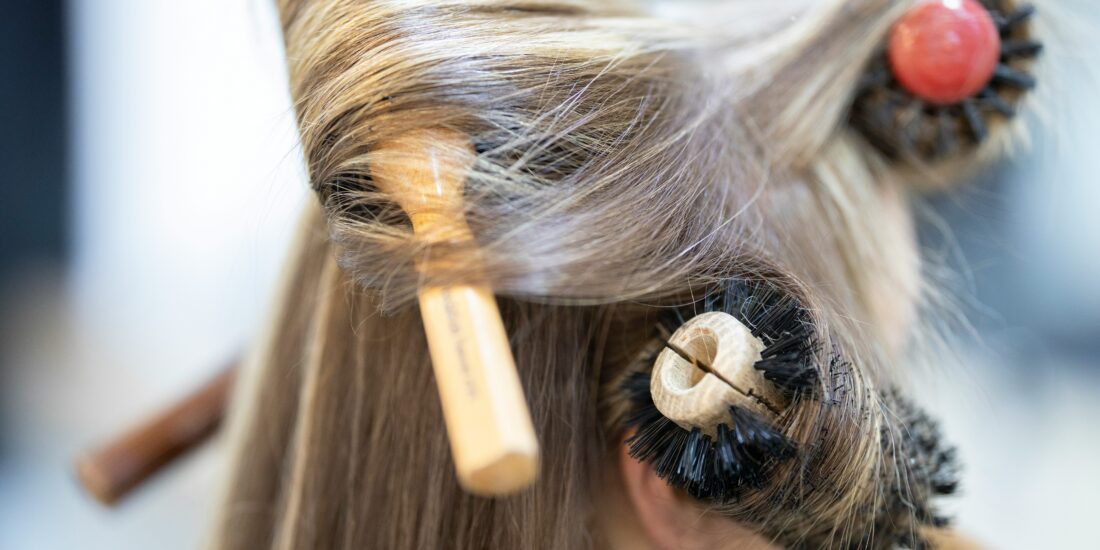
Low density: focus on styling, not product. A root-lifting spray or mousse, blow-dried with a round brush lifting away from the scalp, does more than most bottles on the shelf. The right cut matters too, so ask your stylist about layering suited to low density.
Both fine and low density: keep it minimal and root-focused. Use light product only, and stay on top of trims, since damaged ends drag down what little body you have.
In the salon, we sell on retail for our customers those 2 options :
Kérastase Densifique
Science-backed and clinically tested, for visible results.
- Bain Densité shampoo cleanses while building body
- Fondant Densité conditioner adds fullness without weight
- Genesis Serum Fortifiant works as a daily add-on for breakage-related thinning
- Fine and color-treated? We’ll often swap in Chroma Absolu instead, same lightweight feel, plus color protection
Natulique Volume range
Certified organic, without sacrificing results.
- Volume Hairwash, aloe-based, clarifies without stripping
- Volume Conditioner uses green pea biopeptides and oat extract for fullness
- Root Lifter Volume Tonic, silicone-free root spray for lift between cuts
When it's more than a product problem: in-salon treatment options
Sometimes an at-home product swap genuinely can’t fix fine or thinning hair, especially when there’s visible breakage, a noticeable increase in shedding, scalp sensitivity, or hair that simply feels weaker and more fragile than it used to. That usually signals the hair needs a more concentrated, professional-strength intervention, and it’s where we bring in a Kérastase Fusio-Dose treatment.
How Fusio-Dose works
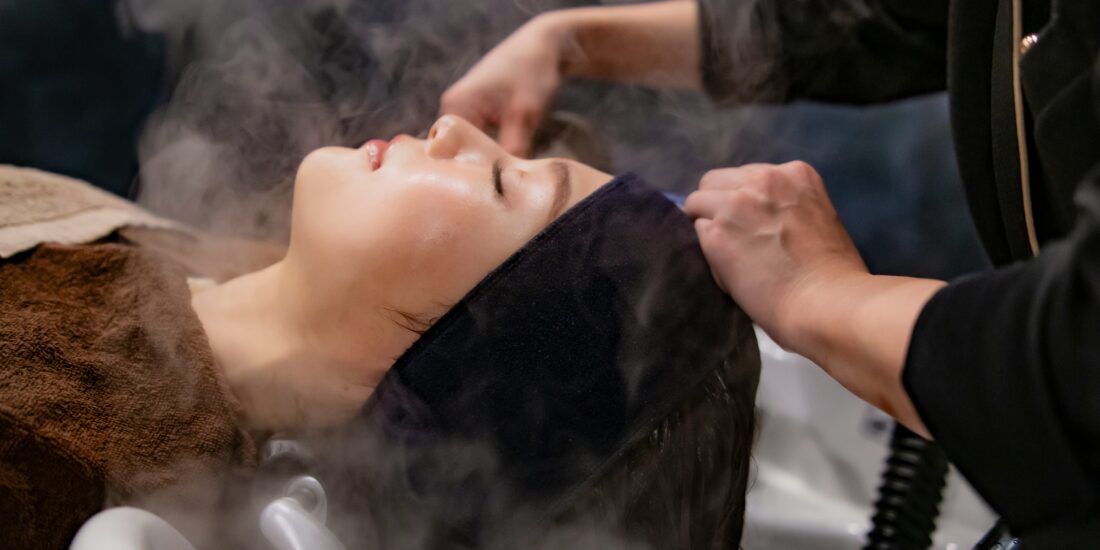
Fusio-Dose is Kérastase’s customizable in-salon treatment system, and it genuinely differs from a standard deep-conditioning add-on. Instead of applying a single pre-mixed product to every client, your stylist assesses your hair and scalp at the start of your appointment. They blend a fresh treatment at the backwash, combining a Concentré, which targets your core hair concern, with a Booster, which targets a more specific secondary goal. Since we mix the combination to order, two clients with “thinning hair” as their concern might walk out with two genuinely different blends depending on what’s actually driving it.
Which blend fits which concern
For thinning or low-density hair with visible breakage, we typically pair the Genesis Concentré with the Reconstruction Booster. This combination targets breakage at the source while adding lightweight volume, which helps hair that’s shedding more than it should or that snaps easily when brushed or styled.
For fine hair that’s simply looking flat or lifeless, rather than showing signs of breakage, we’ll typically use a densifying Concentré on its own or paired with a lightweight volumizing Booster. This adds real thickness and body without the heaviness a rich at-home mask might cause, which matters a lot for fine strands that lose their lift quickly.
For fine or thinning hair with color fade or brassiness layered on top, we can combine a Concentré with the Brillance Booster to address shine and color radiance in the same visit, rather than booking a separate toning service.
One important caveat: Fusio-Dose doesn’t treat hair loss caused by underlying medical conditions, hormonal changes, or genetic pattern thinning. It excels at improving the condition, strength, and visual fullness of the hair you have. But if you’re noticing significant, ongoing hair loss rather than hair that simply feels weaker or thinner in texture, talk to a doctor or dermatologist alongside anything we can do in the salon.
Common mistakes worth avoiding
- Piling on multiple “volumizing” products at once. Layering a volumizing mousse, a root spray, and a texturizing powder in the same routine often backfires, especially on fine hair, since the products add weight even if each one is labeled lightweight.
- Skipping trims to “save length” while hair thins. Damaged, split ends make hair look thinner and more fragile than it is. Regular trims are one of the simplest ways to keep low-density or fine hair looking its healthiest.
- Assuming a thickening shampoo alone will fix low density. Shampoo only sits on the hair for a few minutes before you rinse it out. It can support scalp health and add some temporary body, but it can’t meaningfully change how much hair you have. Styling technique and, where appropriate, professional treatment do more of that work.
- Using heavy heat protectants or serums on fine hair. Brands often formulate heat protectants with coarser or thicker hair in mind. A lightweight, spray-based protectant usually fits fine strands better than a cream or serum.

The bottom line
“Thin hair” gets used as a catch-all, but the real fix depends on whether you’re dealing with strand width, strand count, or both, and those two things call for genuinely different products, cutting techniques, and in some cases, professional treatment. Getting that distinction right from the start is usually the difference between a routine that finally works and one more product sitting unused under the sink.
Not sure which one describes your hair? It’s worth bringing up next time you’re in the chair. It’s a quick conversation, and it can save you both money and frustration on products that were never going to work for your specific hair in the first place. And if breakage, persistent flatness, or a recent change in thickness has been bothering you, ask about adding a Kérastase Fusio-Dose treatment to your next visit; it’s a low-commitment way to see whether a more targeted, professional approach makes the difference your current routine hasn’t.